

Welcome to Learn + Grow, where you will learn tips and tools that will help you be 3% more peaceful + productive in just 3 minutes a week.

A few years ago, I worked with a performance coach — something I do once in a while when I feel I’m not operating at my peak. This time, he ran a full 360-degree analysis of my life. He spoke with my team, my family, and a few close friends.
His goal was to uncover two things:
My superpowers
My blind spots
After weeks of conversations, he came back with six superpowers.
I’m not going to talk about all of them today — just one.
A superpower I didn’t even know I had: Kaizen.
Honestly, I had never heard the word before.
So I went down the rabbit hole.
There’s a dangerous myth many of us believe — that transformation requires a dramatic breakthrough. A bold move. A total reinvention. Overnight success.
Kaizen quietly disagrees.
Kaizen is a Japanese philosophy that gained momentum after World War II, when Japan was rebuilding from devastation. Resources were scarce. Morale was low. Big bets were risky. And yet, out of those constraints came one of the most powerful ideas in business — and life.
Improve a little. Every day. Without stopping.
That’s Kaizen.
Instead of chasing massive change, Kaizen focuses on small, almost boring improvements. Tiny tweaks. Daily refinements. Incremental progress that compounds quietly while everyone else waits for motivation to strike.
From Poor Quality to World-Class Excellence: Toyota’s Kaizen Journey
One of the most powerful examples of Kaizen in action is Toyota, and what makes the story remarkable is where Toyota started.
In its early years, Toyota — and Japanese cars in general — had a poor reputation for quality. They were often seen as cheap, unreliable, and inferior to American and European automobiles. Defects were common. Processes were rigid. Improvement was slow.
Toyota could have tried to fix this with flashy marketing or expensive innovation.
Instead, they chose a quieter revolution — guided by Kaizen and shaped by the teachings of W. Edwards Deming.
Deming, an American statistician and quality expert, introduced Japanese manufacturers to a radical idea:
Quality is not inspected at the end — it is built into the process.
He taught companies to focus on systems, feedback loops, and continuous improvement — empowering workers to fix problems at the source. While many American companies ignored Deming at the time, Japanese manufacturers listened deeply.
Toyota didn’t chase overnight perfection.
They committed to continuous, incremental improvement.
Every employee was encouraged to spot problems.
Any worker could stop the production line if they noticed a defect.
Small inefficiencies were treated as opportunities, not annoyances.
Tiny improvements were made daily — for tools, workflows, materials, and quality checks.
And those tiny improvements compounded.
Over time, Toyota transformed from a company known for poor quality into a global benchmark for reliability, efficiency, and craftsmanship. The Toyota Production System became the gold standard. Business schools studied it. Competitors tried to replicate it.
And Toyota wasn’t alone.
Kaizen, combined with Deming’s principles, spread across the automobile industry and beyond. Brands around the world — from Honda to Ford to BMW — adopted continuous improvement and quality-first thinking.
Not because of one breakthrough moment — but because of thousands of small improvements made consistently over time.
That’s the quiet genius of Kaizen.
It doesn’t rely on intensity.
It doesn’t demand heroics.
It simply asks for commitment — day after day.
Kaizen says you don’t need to be perfect.
You just need to be a little better than yesterday.
And this philosophy isn’t just for factories or corporations.
It’s for your health.
Your relationships.
Your creativity.
Your parenting.
Your inner life.
Your life doesn’t change in moments of intensity.
It changes in moments of consistency.
Progress Without Pressure
After learning all this, I had a moment of clarity:
Yes — this is me. I am Kaizen.
But then came the real question:
How do I actually use it in my life?
The answer didn’t click until I became a dad.
After Aiden was born, I struggled with something deeply personal. I wanted time to read, write, think, and take care of my health — but fatherhood brought a new level of responsibility and unpredictability to my mornings.
Before Aiden, my mornings were sacred. I woke up at 4:45 a.m. and spent 5:00–8:00 a.m. reading, writing, doing yoga and meditation, running, and planning my day. That’s where most of my personal and professional growth happened. I called it my “growth hours.”
Since Aiden was born — between broken sleep and early mornings — those growth hours disappeared. Between taking care of Aiden and running a business, my mornings felt packed before the day even started. I kept telling myself, “I’ll go for a run tomorrow,” or “I’ll read later in the day,” but it never happened.
And that’s when Kaizen came back to me.
And then one day, instead of fighting my schedule, I asked myself a simple Kaizen-style question:
“What’s one small improvement I can make in my current morning routine?”
That question changed everything.
If I couldn’t find more time, maybe I could stack value into the time I already had.
And that’s exactly what I did.
My Kaizen Stack (One Small Improvement at a Time)
Small Improvement #1:
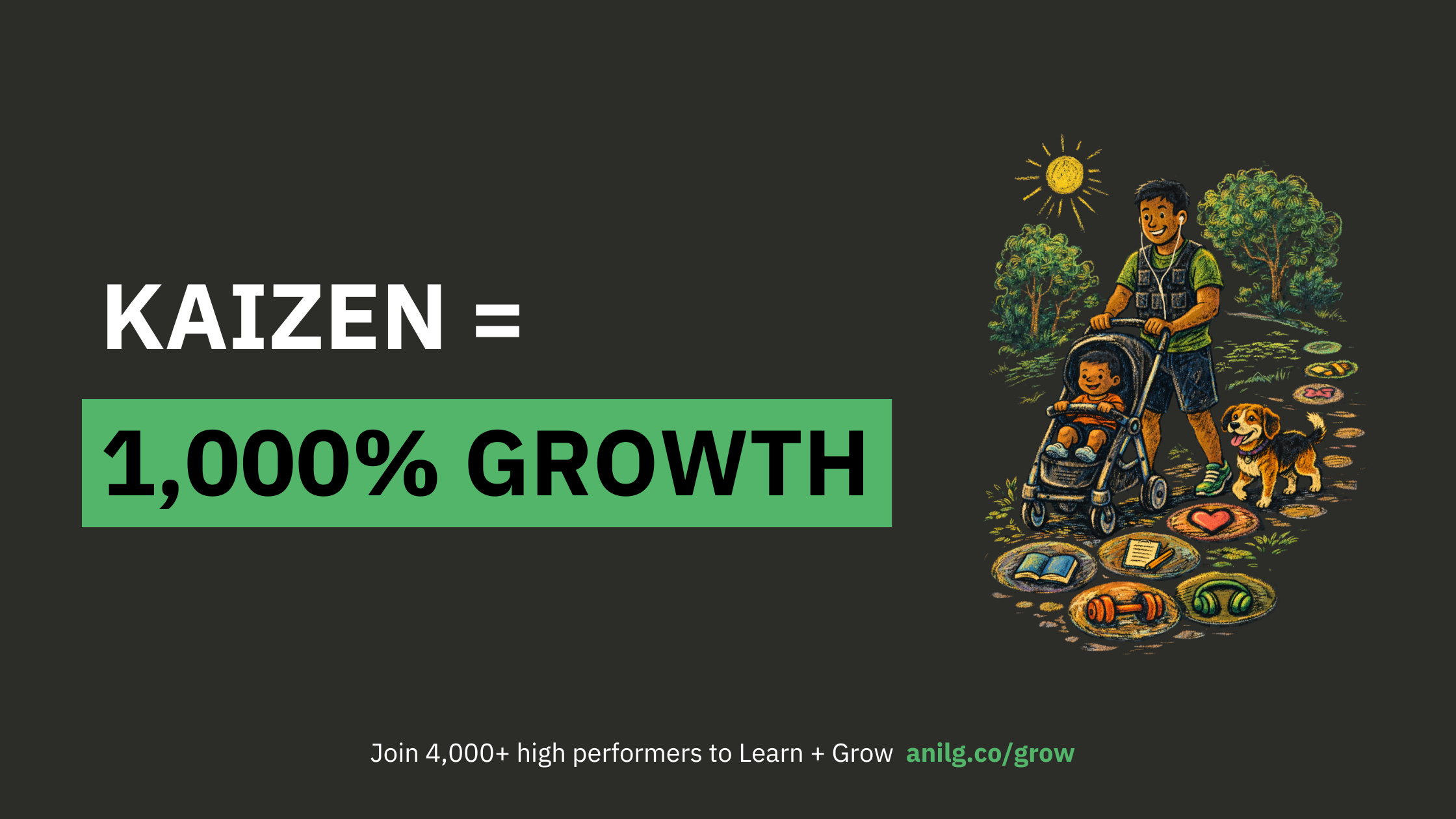
I started a morning walk with Lucy and Aiden. We all get some fresh air, and my wife gets an extra hour of sleep.
Small Improvement #2:
After a few weeks of walking, I started listening to audiobooks. That one tweak got me back into reading and learning again.
Small Improvement #3:
One morning, I thought, “Why not turn this walk into a jog and burn more calories?”
Same time. Same route. Now it was a workout.
Small Improvement #4:
I heard Peter Attia talk about the benefits of walking with weight to build muscle and longevity. So I bought a 20-pound weighted vest from Amazon and started wearing it on my jogs. Suddenly, I was getting a little bit of strength training—without stepping into a gym.
Small Improvement #5:
All these improvements helped me with health and learning, but I was still struggling to find time to write. Around the same time, AI voice tools—especially in ChatGPT—were really improving. So I started using AI audio notes to draft emails, write blogs, brainstorm ideas, outline books, and even solve business problems—all while moving. This turned out to be the most powerful improvement in my entire Kaizen stack.
What My Morning Growth Hour Looks Like Now
After all these improvements, here is what my morning growth hour on these walks looks like:
20 minutes of audiobooks or podcasts
20 minutes of quiet walking—just nature, Aiden, and presence
20 minutes of audio notes for blogs, emails, books, and ideas
That simple 1-hour morning walk turned into a creative, healthy, relationship-building powerhouse:
I get my cardio and strength training
I learn through audiobooks and podcasts
I create content for my blogs and books
I support my wife
I bond with Aiden and Lucy
I reclaim space to think and write
All without adding a single extra hour to my day.
That’s when I truly understood why my coach said Kaizen was my superpower.
Because without realizing it, I’ve always looked for the smallest possible improvement — and stacked those improvements until they transformed my life.
Kaizen taught me I don’t need more hours in the day.
I just need to keep improving the ones I already have.

📚 I’m writing a book
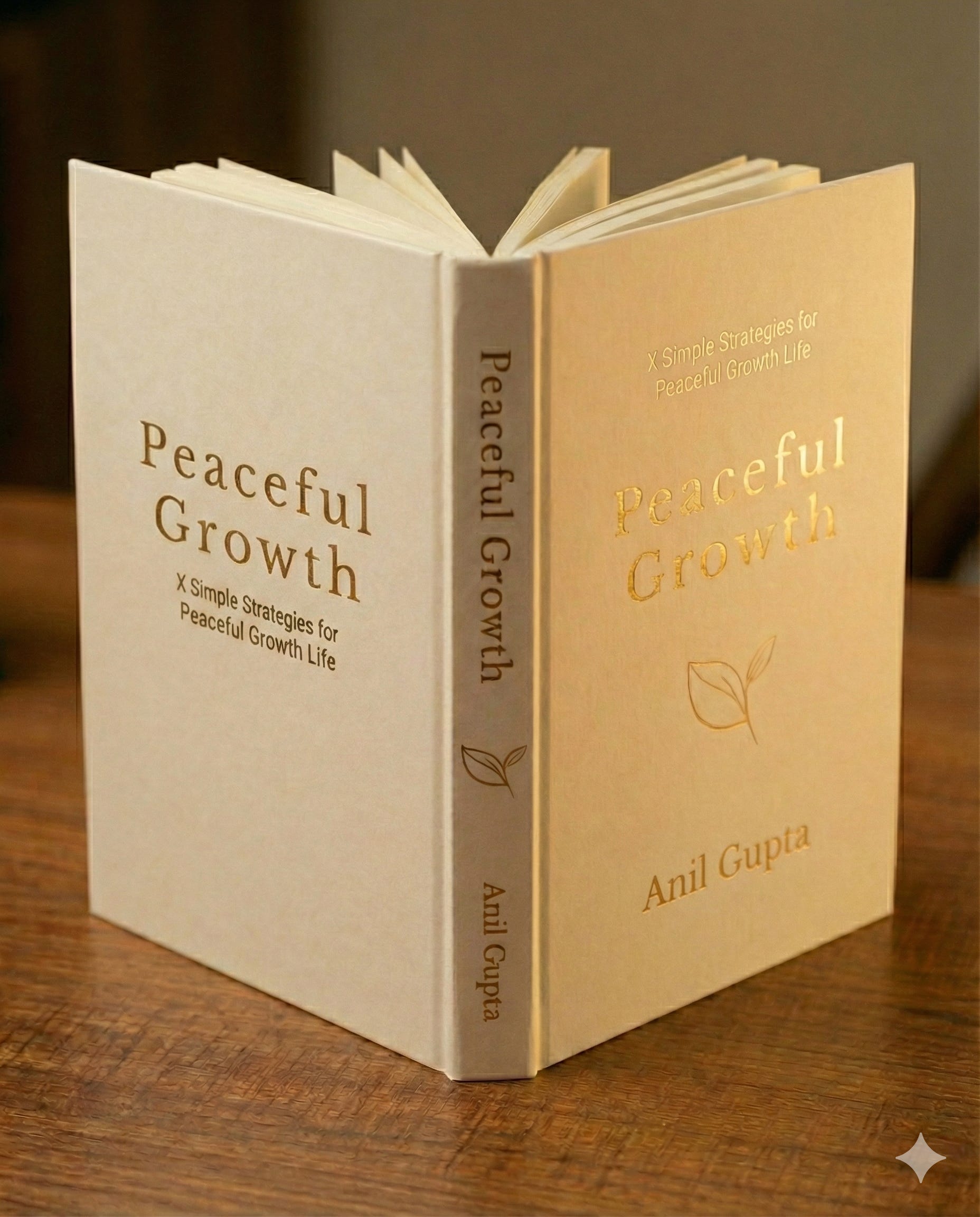
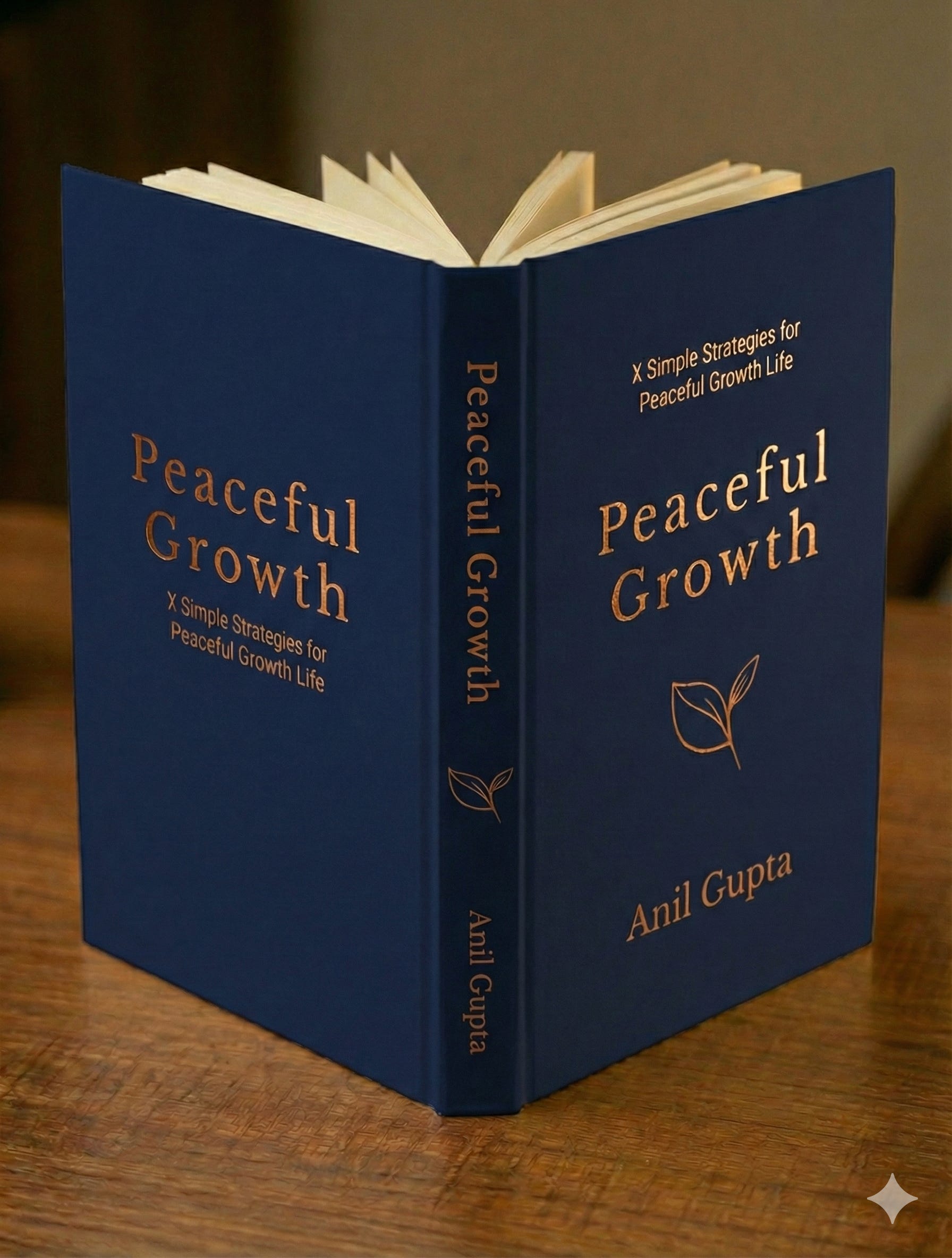
I wanted to share a quick update on my book progress. I’ve finalized the introduction, completed around ten chapters, and locked in the full outline. I’m really excited about how it’s coming together, and I’ll keep sharing updates as I go.
I’ve also been playing around with book cover design using Google’s Nano Banana Pro. Nothing is final yet, but here’s the one I’m liking the most so far. Would love to hear your thoughts!
👋 Until next time, Anil / CEO and Co-Founder of Multidots, Multicollab, and Dotstore.
May the Peaceful Growth be with you! 🪴
More ways to Learn + Grow
#1: Work with WordPress or build on it? Check out WP for Enterprises —your backstage pass to how BILLION-DOLLAR websites run.
#2: My Go-to Tools for Productivity & Growth 👇🏾
